



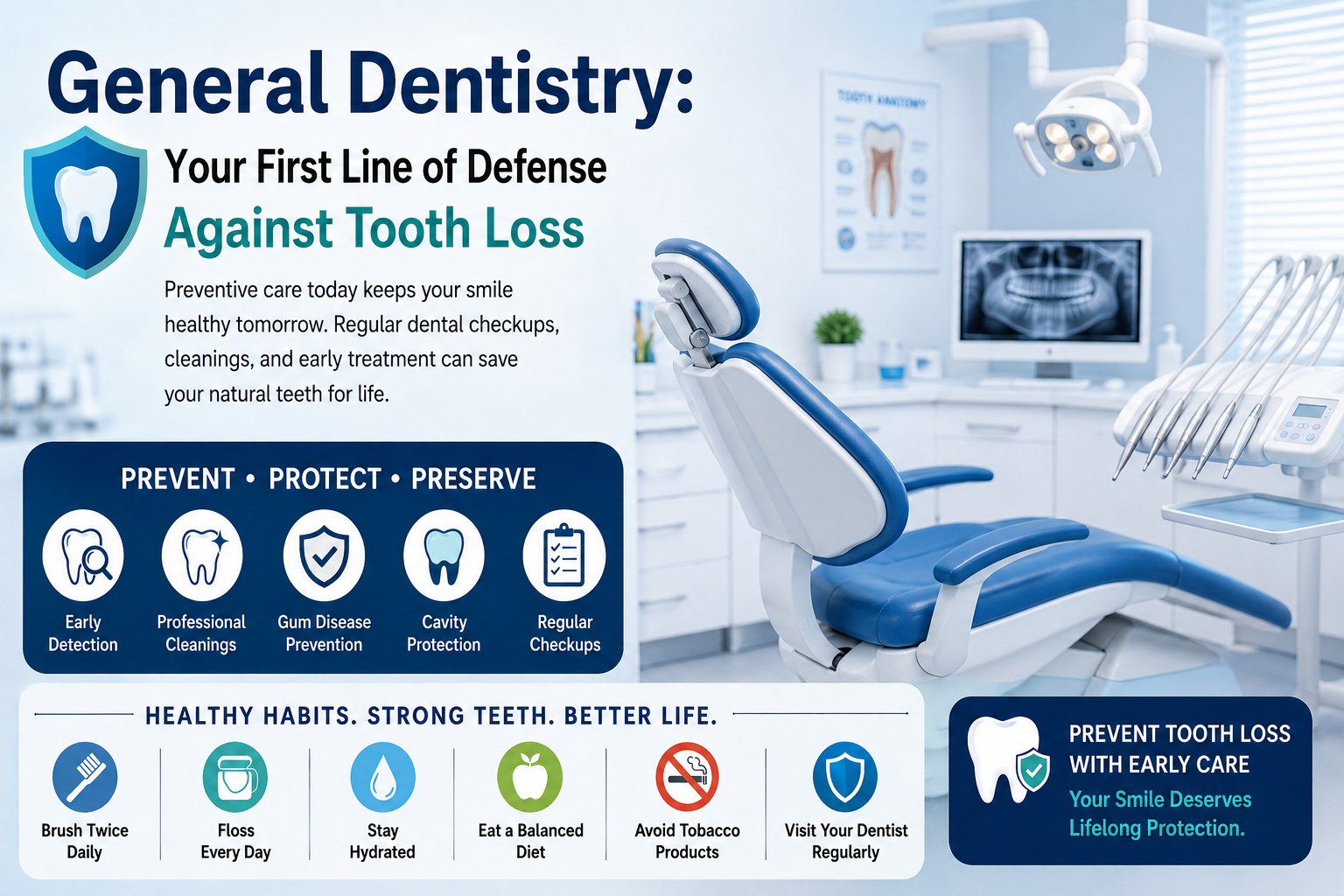
General Dentistry: Your First Line of Defense Against Tooth Loss
Losing a permanent tooth is often preventable with the right dental care. That’s why General Dentistry: Your First Line of Defense Against Tooth Loss is more than just a phrase—it reflects how preventive dental care helps protect your teeth before serious problems develop. Regular dental visits, good oral hygiene, and early treatment can reduce the risk of decay, gum disease, and other conditions that commonly lead to tooth loss.
Many people assume teeth are only lost because of aging. In reality, most cases are linked to untreated dental disease, trauma, or poor oral health habits. General dentistry focuses on identifying these issues early, preserving natural teeth whenever possible, and helping patients maintain healthy smiles throughout life.
This article explains how general dentistry prevents tooth loss, the treatments involved, who benefits most, and practical steps you can take to protect your oral health.
What Is General Dentistry?
General dentistry is the branch of dentistry that focuses on maintaining overall oral health through preventive care, diagnosis, and treatment of common dental conditions.
A general dentist provides routine care such as:

- Dental examinations
- Professional teeth cleaning
- Fillings
- Gum disease treatment
- X-rays
- Fluoride treatments
- Dental sealants
- Oral health education
Rather than treating only severe problems, general dentistry aims to prevent them from developing in the first place.
Why Tooth Loss Happens
Understanding why teeth are lost helps explain why preventive dental care is so important.
The most common causes include:

Tooth Decay
Untreated cavities can gradually destroy the tooth structure. If decay reaches the inner pulp and treatment is delayed, extraction may become the only option.
Gum Disease
Periodontal disease damages the tissues and bone supporting the teeth. Advanced gum disease remains one of the leading causes of tooth loss in adults.
Dental Injuries
Sports accidents, falls, and other trauma can fracture or loosen teeth beyond repair.
Poor Oral Hygiene
Inadequate brushing and flossing allow plaque and bacteria to accumulate, increasing the risk of cavities and gum disease.
Medical Conditions
Certain health conditions, such as uncontrolled diabetes, dry mouth, and immune disorders, may increase the likelihood of oral disease and tooth loss.
Why General Dentistry Is the First Line of Defense Against Tooth Loss
General dentistry focuses on prevention rather than replacement.

Instead of waiting until a tooth becomes severely damaged, dentists monitor changes over time and recommend treatment while problems are still manageable.
Preventive care offers several benefits:
- Detects cavities early.
- Identifies gum disease before significant damage occurs.
- Removes plaque and tartar.
- Monitors bite alignment.
- Evaluates existing dental restorations.
- Provides personalized oral hygiene advice.
Early intervention often means simpler, less invasive, and more affordable treatment.
Preventive Services That Help Save Natural Teeth
Routine Dental Checkups
Regular examinations allow dentists to identify problems that patients may not notice.
Small cavities, cracked fillings, or early gum inflammation can often be treated before they become serious.
Most healthy adults benefit from routine dental visits every six months, though individual recommendations may vary.
Professional Teeth Cleaning
Even people with excellent brushing habits cannot remove hardened tartar at home.
Professional cleanings help:
- Remove plaque buildup.
- Reduce harmful bacteria.
- Lower the risk of gum disease.
- Improve gum health.
- Prevent future dental complications.
Healthy gums provide the foundation for healthy teeth.
Dental X-Rays
Some dental problems develop beneath the surface.
X-rays help detect:
- Hidden cavities
- Bone loss
- Impacted teeth
- Root infections
- Jaw abnormalities
Without imaging, many issues could remain unnoticed until symptoms appear.
Fluoride Treatments
Fluoride strengthens tooth enamel and helps reduce the risk of cavities.
Children commonly receive fluoride treatments, but many adults with a high risk of decay can also benefit.
Dental Sealants
Sealants are thin protective coatings applied to the chewing surfaces of back teeth.
They help prevent food particles and bacteria from settling into deep grooves where toothbrushes may not reach effectively.
How Early Detection Protects Your Teeth
One of the greatest advantages of general dentistry is identifying disease before pain begins.
For example:
- A small cavity may require only a simple filling.
- Early gum disease can often be reversed with professional cleaning and improved home care.
- Minor enamel wear may be managed before fractures occur.
Waiting until discomfort develops often means the problem has already progressed.
Daily Habits That Support Professional Dental Care
Even the best dental treatment cannot replace consistent oral hygiene at home.
General dentists commonly recommend:
- Brushing twice daily with fluoride toothpaste.
- Flossing every day.
- Limiting sugary snacks and drinks.
- Drinking enough water.
- Avoiding tobacco products.
- Wearing a mouthguard during contact sports.
- Replacing worn toothbrushes regularly.
These habits work together with routine dental visits to reduce the likelihood of tooth loss.
General Dentistry vs. Emergency Dentistry
Many patients only visit the dentist when something hurts. However, preventive care and emergency treatment serve different purposes.
| General Dentistry | Emergency Dentistry |
|---|---|
| Prevents dental disease | Treats urgent dental problems |
| Routine examinations | Severe pain management |
| Professional cleanings | Broken or knocked-out teeth |
| Early cavity treatment | Dental infections |
| Gum disease prevention | Trauma-related care |
| Long-term oral health | Immediate symptom relief |
General dentistry aims to prevent emergencies before they occur.
Who Benefits Most from Preventive Dental Care?
Everyone benefits from general dentistry, but some groups face a higher risk of tooth loss.
These include:
- Children developing lifelong oral hygiene habits.
- Adults with previous cavities.
- Smokers.
- Individuals with diabetes.
- Older adults.
- Patients wearing braces.
- People with dry mouth caused by medications.
- Individuals with a family history of gum disease.
For higher-risk patients, regular monitoring becomes even more important.
Common Misconceptions About Tooth Loss
Several myths continue to prevent people from seeking timely dental care.
“Losing Teeth Is a Normal Part of Aging”
Healthy natural teeth can last a lifetime with proper care.
Age alone does not cause tooth loss.
“If My Teeth Don’t Hurt, They’re Healthy”
Many dental diseases develop silently.
Routine examinations help detect problems before pain appears.
“Brushing Alone Is Enough”
Brushing is essential, but flossing, professional cleanings, and regular dental examinations are also necessary for maintaining long-term oral health.
How Lifestyle Choices Affect Long-Term Dental Health
Oral health is influenced by more than brushing and flossing.
Daily habits such as diet, tobacco use, alcohol consumption, stress, and sleep can all affect the health of your teeth and gums.
For example:
- Frequent sugary snacks feed cavity-causing bacteria.
- Smoking significantly increases the risk of periodontal disease.
- Teeth grinding during sleep can wear down enamel.
- Poor nutrition may affect gum health and healing.
General dentists often evaluate these factors as part of a complete preventive care plan rather than focusing only on individual teeth.