



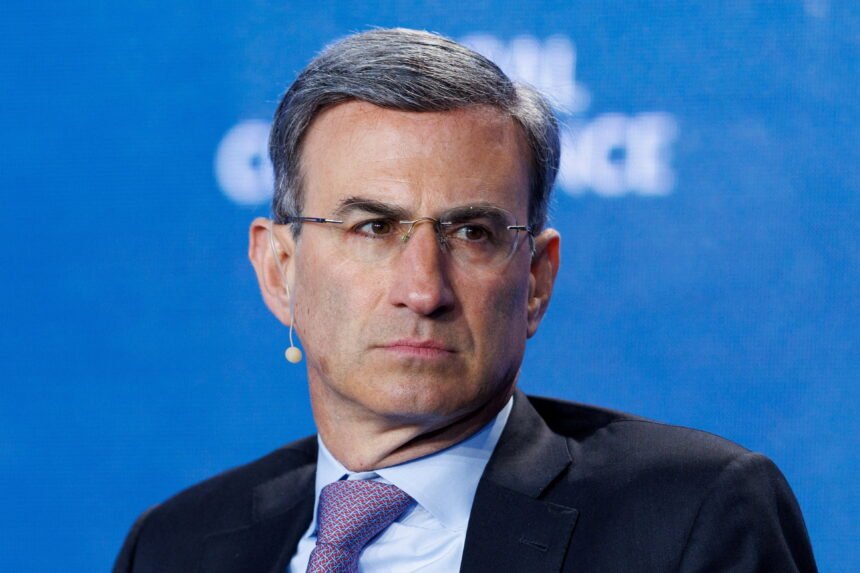
Peter Orszag: Economist, Policymaker and Lazard CEO
Peter Orszag is an American economist, financial executive, and former senior U.S. government official whose career has crossed academia, economic policy, federal budgeting, and investment banking. He served as director of the Congressional Budget Office (CBO) from 2007 to 2008 and later became director of the Office of Management and Budget (OMB) under President Barack Obama. As of 2026, Orszag is CEO and Chairman of Lazard, a global financial advisory and asset management firm.
His career is notable because relatively few economists move between independent government analysis, White House budget management, academia, and senior leadership at a major financial institution. Orszag’s work has particularly focused on federal budgeting, healthcare costs, retirement security, economic policy, and the relationship between government decisions and financial markets.
This article examines Peter Orszag’s education, early career, government service, policy work, transition into finance, leadership at Lazard, and the less obvious connections between these stages of his professional life.
Who Is Peter Orszag?
Peter R. Orszag is an economist and business executive best known today as the CEO and Chairman of Lazard. He joined Lazard in 2016 after several years at Citigroup and previously held senior positions in the U.S. government and at the Brookings Institution.
His public-sector career included two particularly important positions:
- Director of the Congressional Budget Office from January 2007 to November 2008
- Director of the Office of Management and Budget from January 2009 to July 2010
The CBO is Congress’s principal source of independent economic and budgetary analysis, while OMB works within the executive branch on federal budget development and management. Holding leadership positions at both institutions gave Orszag experience from two different sides of the U.S. budget process.
That distinction matters when evaluating his career. His CBO role required nonpartisan analysis for Congress, whereas his OMB position placed him inside the presidential administration and involved implementing the administration’s budget priorities.
Peter Orszag’s Education and Academic Background
Orszag graduated summa cum laude in economics from Princeton University. He later attended the London School of Economics as a Marshall Scholar and earned a Ph.D. in economics. Columbia University’s profile of Orszag also confirms his Princeton economics degree and doctoral training at the London School of Economics.
His academic training helps explain the analytical direction of his career. Rather than focusing exclusively on theoretical economics, Orszag developed an interest in questions where economics intersects with public institutions.
His academic work and later policy positions dealt with subjects including:
- Federal budget policy
- Healthcare spending
- Social Security
- Retirement security
- Tax policy
- Climate policy
- Macroeconomics
- Economic growth
- Government program evaluation
This combination of economics and policy analysis became a recurring theme throughout his career.
Early Career and Work During the Clinton Administration
Before becoming a prominent public policy economist, Orszag worked in academic and government-related economic positions.
During the Clinton administration, he served as a staff economist and later senior adviser and senior economist at the President’s Council of Economic Advisers. He subsequently became a special assistant to the president for economic policy.
These positions gave him early exposure to the way economic research is translated into government decisions.
His career also included work outside government. Brookings records show that he later became a senior fellow and took on several leadership positions involving economic policy research, including work on retirement security and tax policy.
Why His Early Policy Work Matters
Orszag’s early career established a pattern that would continue for decades: combining research with practical policy decisions.
For example, retirement security is not simply a question of investment returns. It involves demographics, government programs, taxation, household savings, labor markets, and long-term fiscal sustainability. Similarly, healthcare policy involves both medical spending and broader questions about federal finances.
That multidisciplinary approach became one of the defining characteristics of Orszag’s professional profile.
Peter Orszag at the Brookings Institution
Orszag joined the Brookings Institution as a senior fellow in 2001. During his time there, he worked on a wide range of economic and public-policy issues.
He later became deputy director of Economic Studies and held leadership roles including director of the Hamilton Project, director of the Retirement Security Project, and co-director of the Tax Policy Center.
The Hamilton Project, in particular, focused on economic growth and policy proposals designed to encourage broad-based prosperity.
His Brookings work helped establish him as more than a conventional academic economist. He was increasingly involved in translating economic research into policy recommendations.
This experience would prove useful when he moved into federal government.
Peter Orszag as Director of the Congressional Budget Office
One of the most significant stages of Peter Orszag’s career began in January 2007, when he became director of the Congressional Budget Office.
According to the CBO’s official historical record, Orszag served from January 18, 2007, until November 25, 2008.
The CBO’s role is fundamentally different from that of a presidential administration. It provides Congress with objective and impartial analysis of economic and budgetary issues. Its work includes economic projections, budget outlooks, cost estimates for legislation, and analysis of fiscal policy.
Healthcare Became a Major Focus
During Orszag’s leadership, the CBO expanded its focus on areas such as healthcare and climate change, according to the archived White House biography describing his tenure.
Healthcare costs were especially important because they have implications beyond the medical system. Rising healthcare spending can affect federal programs, household finances, employers, and long-term government debt.
This helped establish healthcare economics as one of the subjects most closely associated with Orszag’s public policy work.
From the CBO to the Obama Administration
Orszag left the CBO in late 2008 and moved into the incoming Obama administration.
On January 20, 2009, he became director of the Office of Management and Budget. The archived White House records list his term as January 20, 2009, through July 30, 2010.
The transition was significant because his responsibilities changed substantially.
At the CBO, his responsibility was to provide independent analysis to Congress. At OMB, he became part of the executive branch and was responsible for helping manage the federal budget and advance the administration’s policy agenda.
The timing also made the position unusually demanding. The United States was dealing with the aftermath of the 2008 financial crisis and a severe recession.
Peter Orszag and the 2009 Economic Recovery Effort
Orszag entered the OMB at a moment of extraordinary economic pressure.
In February 2009, he discussed the administration’s budget and the economic conditions facing the United States, including the large output gap and federal deficit.
The administration was simultaneously working on economic stabilization and longer-term fiscal issues.
Orszag became involved in the implementation and evaluation of the American Recovery and Reinvestment Act, commonly known as the Recovery Act. In a July 2009 speech, he explained that the legislation had been designed to provide substantial economic support during the downturn while also supporting longer-term recovery.
This period illustrates a central challenge of economic policymaking: governments often have to address short-term emergencies while also worrying about long-term debt and fiscal sustainability.
Orszag’s Role in Healthcare Policy
Healthcare was another major area of Orszag’s work at OMB.
He argued that healthcare costs were closely connected to the long-term fiscal outlook. In a May 2009 briefing, he described healthcare as a major factor affecting the government’s long-term fiscal path.
This was an important policy perspective because the cost of healthcare affects both federal spending and the broader economy.
Orszag was involved in the administration’s healthcare reform effort, although describing him as the sole architect of the resulting legislation would be misleading. Healthcare reform involved numerous officials, legislators, agencies, economists, healthcare organizations, and interest groups.
A more accurate description is that Orszag was one of the administration’s senior economic policy figures involved in analyzing the fiscal and economic implications of reform.
A Lesser-Known Part of His OMB Work: Program Evaluation
One aspect of Peter Orszag’s government work that receives less attention is his emphasis on program evaluation.
In an October 2009 OMB memorandum, Orszag called for increased emphasis on rigorous and independent evaluations of federal programs. The document argued that evaluations could help determine whether programs were achieving their intended outcomes and whether taxpayer resources were being used effectively.
This approach reflects an evidence-based view of government management.
Instead of asking only whether a program exists or how much money it receives, program evaluation asks a more difficult question:
Does the program actually produce the results it is supposed to produce?
That distinction remains relevant to public policy because government spending can increase without necessarily producing proportional improvements in outcomes.
Peter Orszag and Open Government
Orszag also signed the 2009 Open Government Directive while serving as OMB director.
The directive instructed federal agencies to take specific steps supporting transparency, participation, and collaboration.
This part of his tenure demonstrates that OMB’s responsibilities extended beyond simply preparing budgets. The office also played a role in federal management, regulation, performance measurement, and administrative policy.
Peter Orszag’s Career at a Glance
| Period | Position | Main Area |
|---|---|---|
| 1990s | Council of Economic Advisers / Clinton administration | Economic policy |
| 2001–2007 | Brookings Institution | Economic research and public policy |
| 2007–2008 | Congressional Budget Office | Federal budget and economic analysis |
| 2009–2010 | Office of Management and Budget | Federal budget and executive policy |
| 2011–2016 | Citigroup | Corporate and investment banking |
| 2016–2019 | Lazard | Investment banking and strategic advisory |
| 2019–2023 | Lazard Financial Advisory | Global financial advisory |
| 2023–present | Lazard CEO; later Chairman | Corporate leadership |
The dates and roles are supported by CBO, White House, Brookings, Columbia, and Lazard records.
Why Peter Orszag Moved From Government Into Finance
After leaving the Obama administration, Orszag joined Citigroup in 2011, where he became vice chairman of Corporate and Investment Banking and chairman of its Financial Strategy and Solutions Group.
The move illustrates an increasingly common path for senior economists and policymakers: transferring expertise in economics and public policy into financial-sector advisory work.
However, the two environments are quite different.
| Government Policy | Financial Advisory |
|---|---|
| Focuses on public outcomes | Focuses on clients and transactions |
| Uses taxpayer and economic data | Uses financial and market information |
| Works through laws, regulations and budgets | Works through capital markets and corporate decisions |
| Time horizons can span decades | Decisions may involve immediate transactions and long-term strategy |
| Political considerations are unavoidable | Market and commercial considerations are central |
Orszag’s career is unusual because he has worked extensively on both sides of this divide.
Peter Orszag at Citigroup
Orszag spent roughly five years at Citigroup, from 2011 to 2016. His responsibilities included corporate and investment banking and financial strategy.
The experience broadened his understanding of how companies, investors, financial institutions, and governments interact.
That experience was particularly relevant to his later role at Lazard, where strategic financial advice often requires understanding more than balance sheets.
A major transaction can involve economic conditions, regulation, politics, geopolitics, financing costs, investor expectations, and industry-specific trends.
An economist with government experience can bring a different perspective to those questions.
Joining Lazard
Peter Orszag joined Lazard in 2016 as a vice chairman of investment banking. He later became head of North American M&A and global co-head of healthcare before taking leadership of the firm’s Financial Advisory business in 2019.
His progression at Lazard was therefore gradual rather than an immediate jump into the CEO position.
In 2019, he became CEO of Financial Advisory, overseeing advisory businesses serving companies and governments around the world.
That role connected closely with his earlier career because Lazard advises both corporations and governments on major financial and strategic matters.
When Did Peter Orszag Become CEO of Lazard?
Peter Orszag became CEO of Lazard in October 2023.
His position was expanded in January 2025, when he became CEO and Chairman of the Board. Lazard identifies him in that role as of 2026.
His responsibilities now extend beyond individual financial advisory assignments. As CEO and Chairman, he is responsible for the firm’s broader strategy, operations, leadership, and long-term direction.
Lazard describes its business as covering financial advisory and asset management, including areas such as mergers and acquisitions, restructuring, capital markets, geopolitics, and strategic financial decisions.
What Makes Peter Orszag’s Career Unusual?
The strongest distinguishing feature of Peter Orszag’s career is not any single job. It is the combination of institutions in which he has worked.
He has operated in:
- Academic research
- Think-tank policy analysis
- Congressional budget analysis
- Executive-branch policymaking
- Commercial banking
- Investment banking
- Corporate leadership
That combination creates a broad perspective on economic decisions.
A budget analyst might focus on government revenue and spending. An investment banker might focus on valuation and capital structure. A policymaker might focus on social outcomes and political feasibility.
Orszag’s career has involved all three perspectives.
What Is Often Missed About Peter Orszag?
A common way to describe Orszag is simply as a former Obama budget director who became a banker. That description is accurate but incomplete.
His career was built around institutions
Much of Orszag’s professional work has involved institutions rather than isolated economic theories.
Healthcare has remained a recurring theme
Healthcare appears repeatedly across his career, from CBO analysis to OMB policy work and later leadership in Lazard’s healthcare advisory business. Lazard records show that he served as global co-head of healthcare before becoming head of North American M&A.
This continuity is easy to miss when his government and financial careers are viewed separately.
Evidence-based decision-making is another recurring theme
His OMB work on program evaluation emphasized measuring whether government programs actually achieve their intended objectives. In 2026, while accepting the Citizens Budget Commission’s Medal for High Civic Service, Orszag again emphasized rigorous analysis and the importance of evidence in decision-making.
That provides an interesting thread connecting his policy career with his current leadership role.
Peter Orszag’s Current Work and Recent Developments
As of 2026, Orszag remains CEO and Chairman of Lazard.
His recent public profile also includes institutional and civic responsibilities.
In March 2026, the Citizens Budget Commission awarded Orszag its Medal for High Civic Service. The organization cited his commitment to public service and fiscal issues.
In May 2026, he was appointed to the Board of Trustees of the Institute for Advanced Study.
These developments are significant because they show that his career has not moved entirely away from public-policy and academic institutions after entering finance.
Peter Orszag’s Board and Professional Affiliations
Orszag has held affiliations with several prominent institutions. Lazard lists his involvement with organizations including the National Academy of Medicine, the Council on Foreign Relations, the Aspen Economic Strategy Group, the Institute for Advanced Study, the Peterson Institute for International Economics, and Mount Sinai Hospital.
These affiliations reflect the breadth of his interests, particularly around economics, healthcare, public policy, education, and institutional governance.
They also help explain why his professional profile extends beyond investment banking.
Frequently Asked Questions About Peter Orszag
Who is Peter Orszag?
Peter Orszag is an American economist and financial executive. He is the CEO and Chairman of Lazard as of 2026. Earlier in his career, he served as director of the Congressional Budget Office and director of the Office of Management and Budget during the Obama administration. He has also worked at Brookings, Citigroup, and the Council of Economic Advisers.
What is Peter Orszag known for?
Peter Orszag is best known for combining economic research, government policy, and financial leadership. His major public roles included directing the CBO from 2007 to 2008 and OMB from 2009 to 2010. He later moved into banking and became CEO and Chairman of Lazard.
Was Peter Orszag Obama’s budget director?
Yes. Peter Orszag served as director of the Office of Management and Budget during the Obama administration from January 20, 2009, until July 30, 2010. He worked on federal budgeting, economic recovery, healthcare policy, fiscal sustainability, and government management.
What did Peter Orszag do at the Congressional Budget Office?
Orszag directed the Congressional Budget Office from January 2007 through November 2008. The CBO provides Congress with independent analysis of economic and budgetary issues. During his tenure, the agency expanded its work on subjects including healthcare and climate change.
When did Peter Orszag become CEO of Lazard?
Peter Orszag became CEO of Lazard in October 2023. His position expanded to CEO and Chairman of the Board in January 2025. Before becoming CEO, he led Lazard’s Financial Advisory business from 2019 to 2023.
Where did Peter Orszag study economics?
Orszag graduated summa cum laude in economics from Princeton University. He then attended the London School of Economics as a Marshall Scholar and earned his Ph.D. in economics there.
Is Peter Orszag still involved in public-policy work?
Although his primary role is now corporate leadership at Lazard, Orszag continues to have connections with public-policy, academic, and civic institutions. In 2026, he received the Citizens Budget Commission’s Medal for High Civic Service and joined the Institute for Advanced Study’s Board of Trustees.
Conclusion
Peter Orszag’s career is defined by an unusual movement between economics, government, research, and finance. He led the Congressional Budget Office, served as Obama’s OMB director during the aftermath of the financial crisis, worked at Brookings and Citigroup, and eventually rose through Lazard to become CEO and Chairman.
The most useful way to understand Peter Orszag is not simply as an economist or banker, but as a professional whose work has repeatedly connected economic analysis with major institutional decisions. His current position at Lazard represents the latest stage of a career that has consistently operated at the intersection of economics, public policy, finance, and organizational leadership.